How to Eliminate Manual Invoice Entry With AP Automation
Accounts payable still functions like a thing of the past for a lot of businesses. Invoices can be received as scanned photos, PDFs, original documents, or email attachments. Each file is manually opened, data is entered into accounting software, totals are verified, approvals are sent via email, and any issues are followed up on. It works—until it doesn’t.
Manual entry becomes one of the most expensive, time-consuming, and error-prone administrative tasks in the company as the volume of invoices increases. Automation of accounts payable is not intended to replace finance teams. The goal is to get rid of boring manual labor that diverts talented employees from more important tasks.
Businesses may significantly shorten processing times, increase accuracy, fortify controls, and obtain real-time cash flow visibility by automating invoice capture, validation, approval, and posting. Eliminating manual invoice entry is often the first—and most impactful—step toward modern financial operations.
Why Manual Invoice Entry Persists

Many businesses continue to rely on human invoice entry despite advancements in financial technology because it feels comfortable. Automation was not intended for legacy accounting systems. The formats of vendor invoices are not always uniform. Over time, approval processes changed informally.
Manual entry frequently seems doable in smaller teams—until expansion reveals its limitations. Additionally, because financial departments are afraid of disruption, manual processes continue to exist. It might feel dangerous to change AP operations, particularly when accuracy and compliance are involved.
However, the true danger is in continuing to use antiquated, poorly scalable procedures. Data entry mistakes, overlooked discounts, postponed approvals, and strained vendor relationships all rise with the volume of invoices. Manual entering gradually reduces control and efficiency rather than breaking abruptly.
The True Cost of Manual AP Processes
Manual invoice entry is considerably more expensive than labor hours. Human mistake is a potential with every hand input invoice. It takes time to fix incorrect amounts, duplicate entries, mismatched purchase orders, and incorrectly applied taxes.
Errors have an ongoing impact on financial reporting, vendor confidence, and audit preparedness. The approval cycle is further slowed down by manual procedures. Invoices are waiting to be reviewed in inboxes. Emails are missed by approvers. Teams in charge of finance pursue signatures.
Payment deadlines are approaching in the meantime. In addition to destroying chances for early payment discounts, late payments harm vendor relationships. These inefficiencies gradually deplete funds and reputation.
What AP Automation Really Means
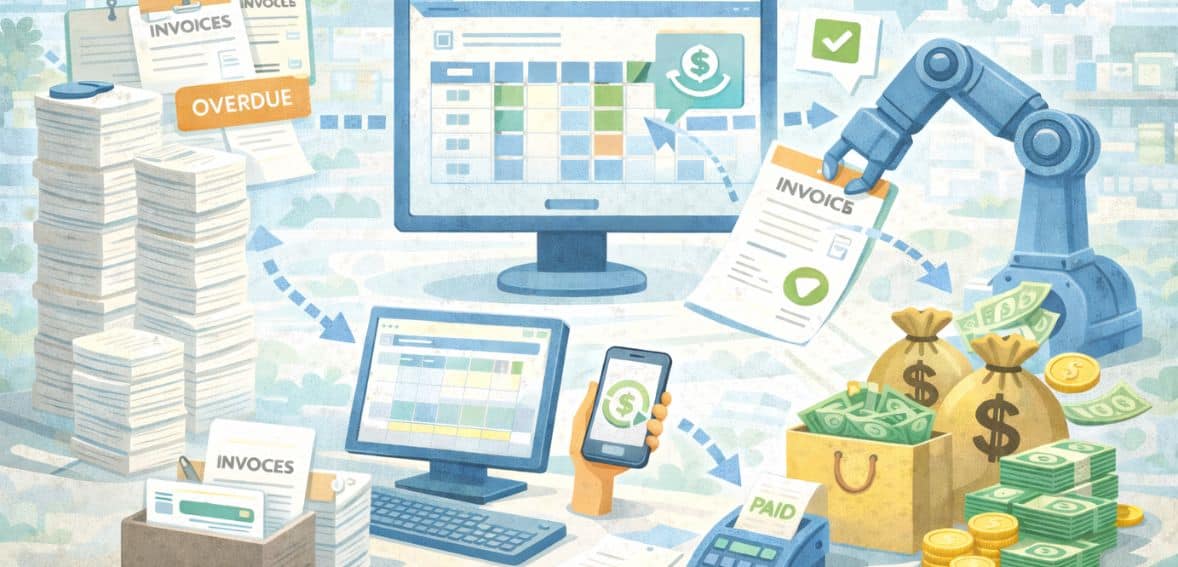
Accounts payable automation is a networked system that manages invoice processing from start to finish rather than a single tool. The process starts with automatic invoice capture, which extracts important information including the vendor name, invoice number, line items, quantities, and due dates using optical character recognition and machine learning.
Before sending invoices through predetermined approval workflows, the system verifies that information against purchase orders, contracts, and vendor records. Invoices are automatically sent to the accounting system and scheduled for payment after they are authorized.
Every activity is visible, traceable, and recorded throughout the process. Instead of depending on human recall and follow-up, AP automation replaces manual data entry with intelligent workflows that adjust to business regulations.
Eliminating Data Entry at the Source

The removal of manual data entering is the biggest direct advantage of AP automation. Finance teams examine and verify data that has previously been collected rather than entering invoice details into accounting software.
Processing time is significantly decreased by this change. Things that used to take days can now be finished in a matter of hours or minutes. Consistency is also enhanced by automated data collection.
By using the same extraction logic each time, the system minimizes variation brought on by staff members’ varying interpretations of invoices. As machine learning models learn from adjustments, their accuracy gradually increases. Better financial reporting is supported by a cleaner, more reliable AP data set.
Standardizing Invoice Intake Across Vendors
The range of invoice formats used by vendors is one of the difficulties with manual AP. By establishing a centralized intake route, automation resolves this issue. Invoices go through the same processing pipeline regardless of how they are received—by email, upload, EDI, or vendor portals.
The disarray of tracking bills across numerous inboxes and files is removed by this standardization, which also streamlines downstream procedures. Visibility is also enhanced by centralized intake. Regardless of the source, finance teams can view every invoice on a single dashboard. Nothing is lost. In a shared mailbox, nothing is overlooked. By itself, this visibility lowers risk and enhances control.
Faster, Smarter Approval Workflows
Spreadsheets, email chains, and verbal follow-ups are all necessary for manual approvals. This is replaced by organized workflows in AP automation, which route invoices automatically according to rules like department, amount, vendor, or project. Approvers can examine invoices from any device and receive clear notifications. Accountability is also enforced via automation.
There is a clear trail for each invoice, and delays are apparent. Teams in charge of finance are no longer required to pursue approvals mindlessly. Invoices are prevented from stalling indefinitely by escalation rules. Stronger vendor connections and quicker payments result from quicker approvals. Integrating a reminder system with your AP automation helps reduce missed approvals and accelerates invoice processing, further eliminating manual follow-ups.
Reducing Errors and Duplicate Payments
In manual AP setups, duplicate invoices are a frequent—and costly—issue. By matching invoice numbers, amounts, vendors, and dates, automation systems are able to automatically identify duplicates. Before payment is made, they identify irregularities.
Additionally, validation procedures make sure that invoices adhere to contract terms and purchase orders. Early detection of discrepancies makes them easier to fix. Internal financial discipline is strengthened, rework is decreased, and overpayments are avoided due to this proactive control.
Improving Cash Flow Visibility

Because invoices are not recorded until they are entered, manual invoice entry hides cash flow. This dynamic is altered by automation. Finance executives have real-time visibility into outstanding liabilities because invoices are recorded as soon as they are received. Forecasting is enhanced by this visibility.
Companies are able to anticipate payments, strategically manage disbursements, and steer clear of unpleasant shocks. Improved forecasting facilitates more intelligent choices about working capital, vendor negotiations, and the timing of investments. AP automation simplifies matching payments to invoices, and having an effective invoice reconciliation guide helps teams further refine cash flow tracking and reduce discrepancies.
Strengthening Compliance and Audit Readiness
When invoices are dispersed over spreadsheets, filing cabinets, and email threads, audits become difficult. An entire digital audit trail is produced by AP automation. All invoices, approvals, changes, and payments are recorded and searchable. This openness lowers the risk of noncompliance and makes audits easier.
Instead of being manually enforced, controls are integrated into the system. Documentation standards, approval levels, and segregation of roles are all applied consistently. Instead of being an afterthought, compliance is integrated into the workflow.
Empowering Finance Teams, Not Replacing Them
One common misconception is that jobs in finance are at risk from automation. AP automation actually improves finance positions. Teams have more time to concentrate on analysis, vendor strategy, and process improvement when tedious data entry is eliminated.
Instead of working as clerks, finance professionals take on the role of guardians of financial intelligence. They spend more time preventing issues than responding to them. Automation facilitates expansion without necessitating corresponding increases in personnel, which is essential for expanding businesses.
Supporting Business Growth Without Bottlenecks

Manual AP procedures are not scalable. Staff burnout, backlogs, and errors all rise with the volume of invoices. Automation is easily scalable. The process is the same whether processing 10,000 or 100,000 invoices.
Businesses that are growing into new markets, adding suppliers, or boosting transaction volume would particularly benefit from this scalability. A significant operational barrier is eliminated with AP automation, enabling growth without chaos.
Enhancing Vendor Relationships
Vendors care about being paid accurately and on time. Automation improves both. Faster processing reduces late payments. Clear communication and consistent handling build trust.
Some automation platforms also offer vendor portals where suppliers can submit invoices, track status, and update information. This transparency reduces inquiries and strengthens relationships. Vendors who trust your AP process are more flexible partners.
Integrating With Existing Financial Systems
Accounting, ERP, and payment systems are all easily integrated with modern AP automation solutions. This integration guarantees that automation improves rather than replaces current workflows.
Automatic data transfer between systems minimizes reconciliation effort and guarantees consistency. Parallel process management is not necessary for finance teams. Automation becomes sustainable instead than disruptive through integration.
Change Management as the Key to Successful AP Automation
The secret element that determines whether AP automation is successful or fails is change management. Broken habits cannot be fixed by technology alone. Teams need to comprehend why manual entry is being eliminated and how automation promotes accuracy rather than just speed.
Anxiety during transition reduces by training, role definitions, and clear documentation. Before a broader deployment, workflows can be improved by starting with a pilot group. Employee resistance naturally decreases when they see fewer follow-ups, cleaner records, and quicker approvals. Participation in leadership is important.
Adoption rises when managers actively utilize dashboards and reports. AP automation is treated as a process improvement project rather than a software installation in effective change management. This way of thinking guarantees long-term use, accountability, and measurable operational improvement for businesses of all sizes and sectors worldwide.
Strengthening Cross-Department Collaboration Through Automation
The way finance teams work with other departments is also altered by AP automation. AP becomes a service partner to operations, procurement, and leadership rather than chasing paperwork. By ensuring that invoices are quickly received by the appropriate approver, automated routing lowers interdepartmental friction.
Accountability is enhanced when departments are able to see the status of their spending and awaiting approvals. Behavior is changed by this transparency. When delays are apparent, managers provide their approval more quickly. When liabilities are evident, budget owners can make well-informed judgments. Because procedures feel equitable and consistent, automation eventually promotes cross-functional trust.
Finance is now seen as an enabler rather than a bottleneck. This modest but significant cultural shift supports quicker, cleaner financial operations across expanding companies and complicated organizational environments in today’s modern enterprises worldwide, while also enhancing internal relationships.
Overcoming Change Resistance
Change is necessary to adopt AP automation, and resistance to change can arise. People are just as important to successful implementations as technology. Confidence is increased through training, progressive rollouts, and clear communication.
Adoption quickens when employees realize how automation lessens workload and irritation. Early successes, like quicker approvals or fewer mistakes, create momentum. Instead of being a threat, change turns into an improvement.
Measuring the Impact of AP Automation

There are measurable benefits to doing away with manual invoice entry. Reductions in processing time, mistake rates, and cost per invoice are common for businesses. Cycle times for approval are getting shorter.
Discounts for early payments rise. Vendor satisfaction rises. These measurements support ongoing optimization and highlight the benefits of automation. AP automation is a developing capacity that gets better with use; it is not a one-time project.
The Long-Term Strategic Value
There are more reasons to do away with manual invoice entry besides efficiency. The goal is to turn AP into a strategic asset rather than a reactive function. Clean data, robust controls, and real-time insights are all provided by automated AP.
This foundation eventually supports more extensive financial automation projects, such as predictive analytics and cash management. AP automation is integrated into a modern financial ecosystem that facilitates quicker and more intelligent decision-making.
Conclusion
The burden of manually entering invoices has been eliminated. Businesses may replace tedious, error-prone procedures with clever workflows that grow, change, and get better over time with accounts payable automation. Faster processing, more robust controls, improved cash flow visibility, and empowered finance teams are the outcomes.
Financial transformation frequently begins with the elimination of human entry. It puts businesses in a position to grow sustainably and releases them from operational drag. AP automation is a competitive requirement in a commercial setting where speed, accuracy, and insight are more important than ever.
FAQs
How quickly can manual invoice entry be eliminated with AP automation?
Once invoice intake and approval workflows are live, most organizations see major reductions in manual entry within a few weeks.
Can AP automation handle non-PO invoices?
Yes. Modern AP systems use flexible workflows and validation rules to manage both PO and non-PO invoices.
Does automation increase audit scrutiny?
No. Automation typically simplifies audits by providing consistent processes, clear approval trails, and detailed logs.
Is AP automation beneficial for small businesses?
Yes. With limited administrative staff, small teams often see faster returns from automation.
Is AP automation secure enough for regulated industries?
Yes. Leading platforms are built with compliance standards, role-based access controls, and strong encryption.